


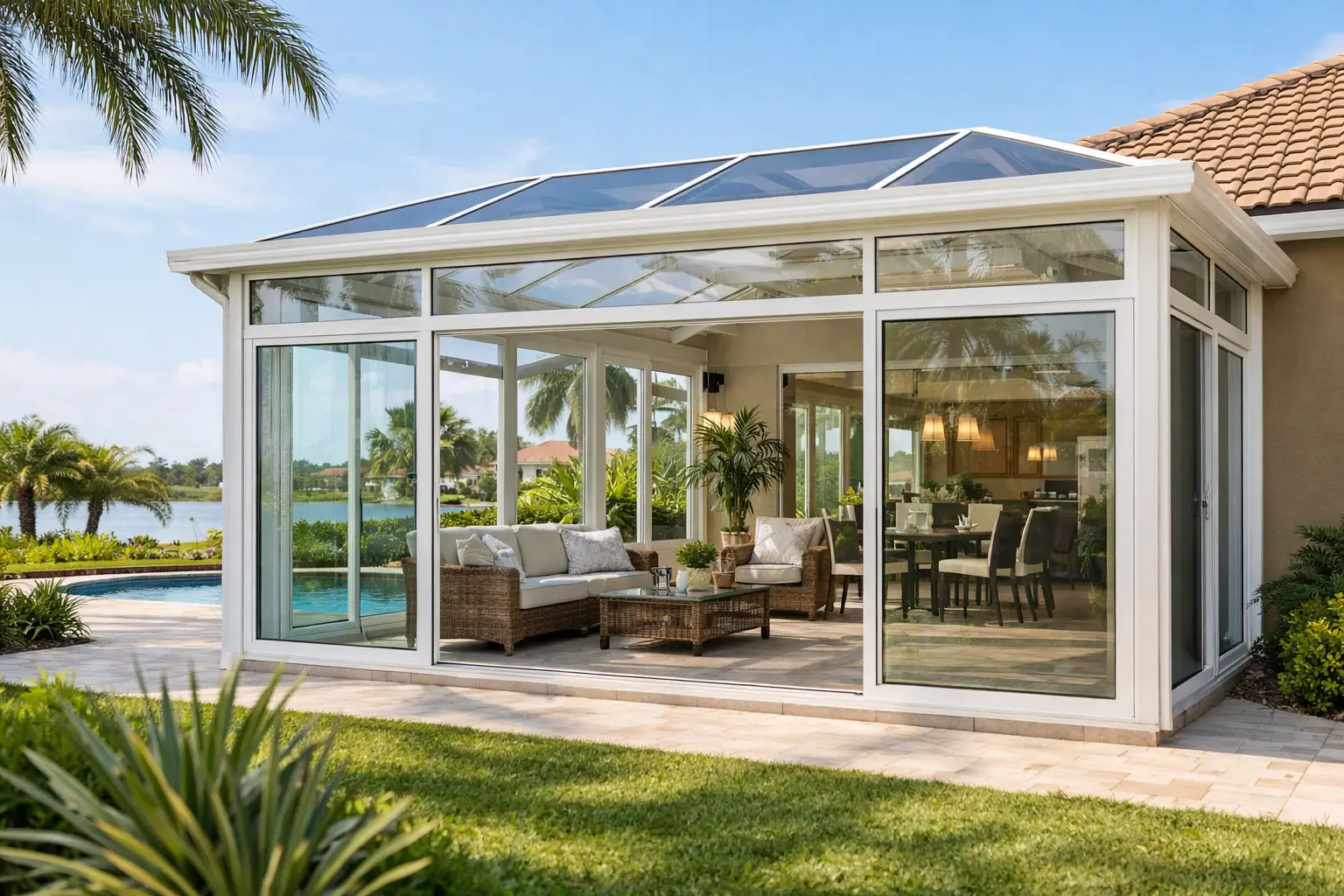
A sunroom can be one of the most enjoyed spaces in a Florida home, but it also lives with constant sun, humidity, wind-driven rain, salt air, and the possibility of tropical storms. So, how long do sunrooms last? A professionally designed and installed sunroom can commonly serve a home for 20 years or more, with many structural components lasting far longer when they are made from quality materials and properly maintained.
The more useful answer is that a sunroom does not have one expiration date. Its lifespan depends on the enclosure type, aluminum framing, roof system, glazing, foundation, installation quality, and exposure to Florida’s coastal weather. Screens, seals, fasteners, and moving components may need attention long before the primary structure does.
How Long Do Sunrooms Last in Florida?
For many Florida homeowners, a well-built aluminum sunroom can last 20 to 30 years or longer. High-quality aluminum framing is naturally resistant to rust, a major advantage in humid and coastal environments. With proper engineering, secure anchoring, and routine service, the frame and roof structure can remain a long-term part of the property.
However, individual components age at different rates. Screen mesh may need replacement in roughly 7 to 15 years, depending on sun exposure, pets, landscaping, and storm damage. Window and door seals can gradually lose performance over time. Roof panels, gutters, hardware, and fasteners may also need maintenance or replacement before the enclosure itself reaches the end of its useful life.
A sunroom near the ocean may require more frequent inspections than one farther inland. Salt air can accelerate corrosion on unprotected or mismatched hardware, while intense ultraviolet exposure can wear down sealants and affect lower-grade panels. These conditions do not make a sunroom a poor investment. They simply make material selection and skilled installation more important from the start.
What Has the Biggest Effect on Sunroom Lifespan?
The original installation has an outsized impact on how a sunroom performs over the years. A structure must be correctly attached to the home, anchored for applicable wind loads, flashed to manage water, and built with compatible materials. Small shortcuts at roof connections, fasteners, or drainage paths can become leaks, movement, and costly repairs later.
Florida weather also places real demands on the roof. A sunroom roof handles daily heat, seasonal downpours, debris, and high winds. Insulated roof panels can help control heat gain and improve comfort, while properly sized gutters and drainage prevent water from backing up near the house. A roof system that is appropriate for the structure and local conditions will generally outlast one chosen only for the lowest upfront price.
The condition of the existing home matters as well. If a sunroom is added to a settling slab, deteriorating fascia, damaged wall, or poorly performing roofline, the new enclosure can inherit those problems. Before construction begins, a qualified contractor should evaluate the attachment area and identify repairs that are necessary to support a lasting installation.
Finally, maintenance matters, although it does not need to be complicated. Keeping tracks clear, washing away salt residue, checking caulk lines, and addressing small leaks promptly can prevent minor issues from spreading into framing or interior finishes.
Signs Your Sunroom Needs Repair Instead of Replacement
Age alone is not a reason to replace a sunroom. Many older enclosures can be restored with targeted improvements, especially when the primary aluminum frame remains straight, secure, and free of significant damage.
Water intrusion is often the first issue homeowners notice. A drip during heavy rain may come from a worn gasket, failed sealant, clogged gutter, loose fastener, or roof-to-wall flashing issue. Finding the actual source is essential. Adding more caulk without correcting the drainage or connection problem can delay a proper repair rather than solve it.
Damaged screens, faded panels, sticking doors, and worn rollers are also commonly repairable. Rescreening a lanai or replacing selected screen panels can refresh the space without rebuilding the enclosure. Likewise, replacing weatherstripping or upgrading a door can improve comfort and usability when the frame is still in good condition.
Consider a full replacement or substantial rebuild when there is widespread corrosion, recurring leaks from multiple system failures, major storm damage, structural movement, or an enclosure that no longer meets the way you use the home. Homeowners may also choose replacement when they want stronger storm protection, a more insulated roof, updated windows, or a true conditioned living space rather than a seasonal enclosure.
How to Make a Sunroom Last Longer
The best time to protect a sunroom is before it is built. Choose an experienced local contractor that understands coastal construction, appropriate permitting, drainage, and the wind requirements that apply to your property. Premium aluminum systems, quality fasteners, and properly engineered roof and wall connections are practical safeguards, not cosmetic upgrades.
After installation, schedule a visual inspection at least once a year and after any major storm. Look for loose screens, cracked sealant, standing water, discolored ceiling panels, sticking doors, and debris in gutters or tracks. If you live near the coast, rinse the exterior periodically with fresh water to help remove salt deposits from frames, hardware, and screen components.
Avoid attaching heavy décor, planters, or unapproved accessories to the framing. These additions can create stress points, interfere with drainage, or affect how the structure performs in high winds. If you want to add retractable screens, shades, doors, or other features, have the system reviewed so the upgrade is compatible with the existing enclosure.
It is also wise to act quickly after a storm. Even if the sunroom appears intact, look for bent members, loose roof panels, water staining, damaged anchors, and torn screens. Early professional attention can keep a manageable repair from becoming a larger restoration project.
Is a Sunroom a Good Long-Term Investment?
A durable sunroom gives a Florida property more usable space without requiring a full conventional room addition. It can create a protected place for morning coffee, family gatherings, hobbies, or entertaining while preserving views and bringing in natural light. For property owners, the value is not just measured in years of service. It is measured in how reliably the space performs through heat, rain, and changing seasons.
The lowest bid is rarely the best measure of long-term value. A sunroom that is properly planned for your home, built with premium-quality materials, and installed by skilled professionals is more likely to deliver comfort and dependable performance for decades. Jensen Beach Aluminum & Windows helps homeowners evaluate enclosure options with Florida conditions in mind, from the first consultation through professional installation and ongoing service.
A sunroom should feel like an extension of your home, not another item on your repair list. When you address small issues early and invest in quality craftsmanship, the space can remain a comfortable, protected part of your property for many years to come.