


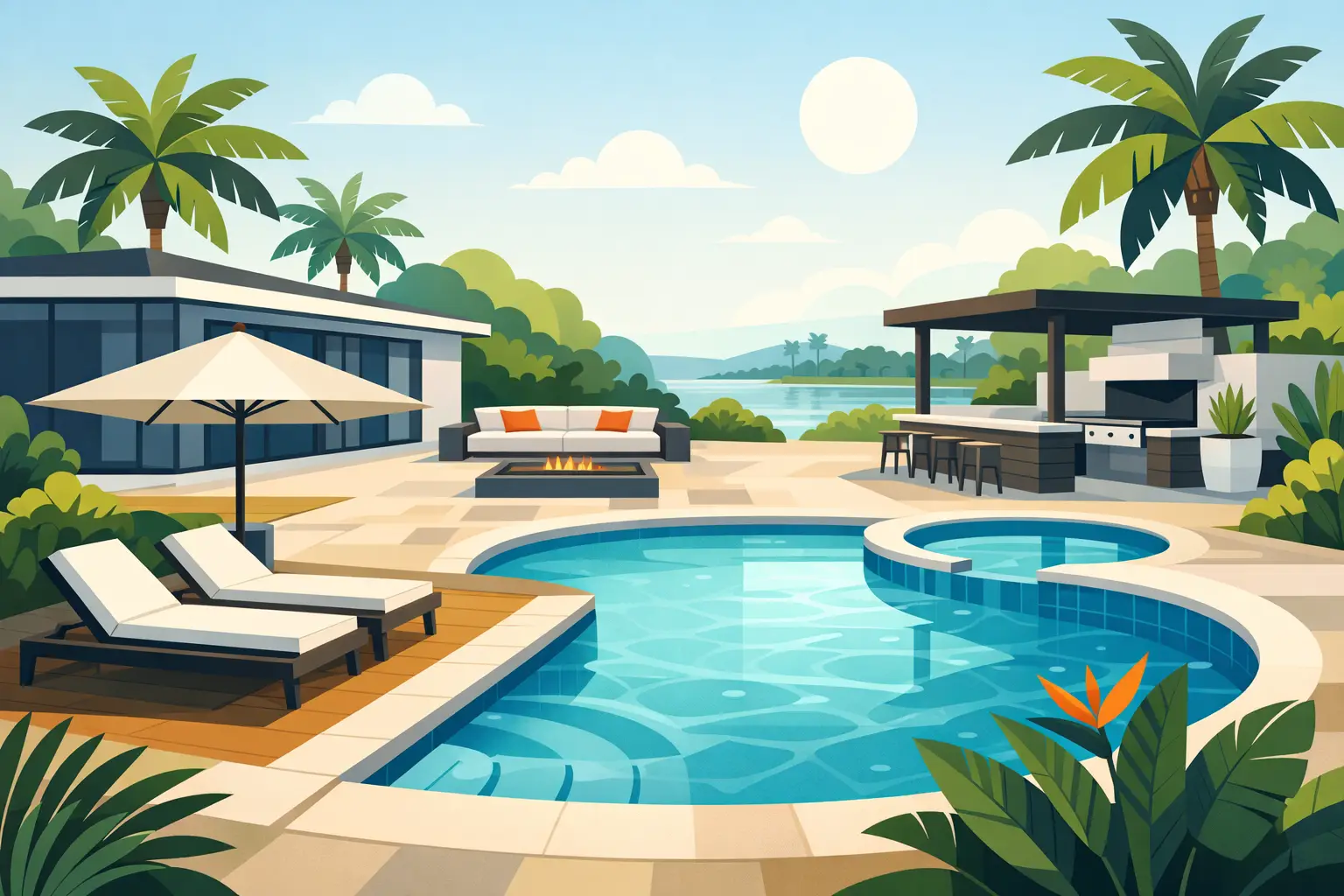
A cracked, stained, or slippery pool deck changes more than the appearance of a backyard. It can limit how safely your family and guests use the pool, create drainage concerns, and make an otherwise well-kept property feel dated. A successful pool deck transformation addresses those problems together, with materials and installation methods suited to Florida heat, rain, humidity, and coastal exposure.
For homeowners on the Treasure Coast, the right project is not simply about choosing a new surface color. It is about creating an outdoor area that is comfortable underfoot, drains properly, complements the home, and holds up through years of sun and summer storms.
Start With the Conditions of Your Existing Deck
Every sound plan begins with an honest look at the current deck. Surface cracks may be cosmetic, but they can also point to settling, poor drainage, or deterioration below the finish. Areas that hold water after rain can become slippery and may contribute to staining, mildew, or damage around the pool edge.
Pay attention to how the deck performs at different times of day. Florida sun can make dark or dense surfaces uncomfortable to walk on, especially around a pool where bare feet are expected. If the deck sits near mature landscaping, fallen leaves and irrigation overspray may increase staining or moisture buildup. Near the coast, salt air adds another factor that calls for durable, appropriate materials.
A professional site evaluation should also consider the deck’s slope, expansion joints, transitions to the home and enclosure, and the condition of coping around the pool. These details determine whether a resurfacing project is practical or whether sections of concrete need repair or replacement first. Covering a deeper issue may improve appearances briefly, but it rarely delivers the long-term value property owners expect.
Choose Materials for Comfort, Safety, and Maintenance
The best material depends on the structure of the existing deck, the desired finish, budget, and how the outdoor space is used. There is no single right answer for every Florida property.
Pavers remain a popular choice because they offer a finished, custom appearance and a wide range of patterns, colors, and textures. They can define lounging areas, outdoor kitchens, walkways, and pool borders with more visual character than a basic slab. When properly installed on a stable base, pavers also allow for targeted repairs if an individual area is damaged or settles over time.
Concrete can be an excellent option when homeowners want clean lines, a cohesive surface, and a practical investment. New concrete, decorative finishes, and properly selected coatings can create a refreshed pool area without the look of a standard gray slab. The key is preparation. Concrete needs appropriate reinforcement, control joints, slope, and finishing to perform well in a wet, high-heat environment.
Textured finishes deserve special consideration around a swimming pool. A surface should provide traction when wet without being excessively rough on bare feet. Very aggressive textures may improve grip, but they can be hard to clean and uncomfortable for children or guests. A skilled contractor can help balance slip resistance with daily comfort.
Color matters, too. Lighter shades generally stay cooler in direct sunlight and can make a compact patio feel more open. Mid-tone blends may hide dirt and minor staining more effectively. The best choice usually ties the deck to the home’s exterior, roof tone, pool cage, and landscaping rather than treating it as a separate feature.
Plan the Pool Deck Transformation Around How You Live
A deck should support the way you actually use your backyard. A couple who prefers quiet mornings by the pool needs something different from a family that hosts weekend gatherings or a property owner preparing a vacation rental for frequent guest turnover.
Think beyond the waterline. Where will lounge chairs sit without blocking the walking path? Is there enough space for a dining table, grill area, or conversation seating? Would a shaded structure make the deck usable during the hottest part of the afternoon? These decisions are easier and more cost-effective to make before installation begins.
A pool deck transformation can also be the right time to improve the connection between the deck and surrounding outdoor features. New pavers may extend to a lanai entrance. A refreshed concrete area may create a clearer route from the back door to the pool. A pergola, awning, retractable screen, or louvered roof system can add shade and help define separate outdoor zones.
For enclosed pools, consider how the deck will work with the cage itself. A worn pool enclosure, damaged screen panels, or outdated framing can distract from a newly finished deck. Coordinating rescreening, cage improvements, or a new enclosure with the deck project can create a more complete result and reduce disruption later.
Drainage and Installation Quality Cannot Be Afterthoughts
Florida’s heavy rain can expose weaknesses quickly. Water should move away from the home and drain predictably around the pool area. Poor slope can leave standing water, increase slip hazards, and create persistent moisture near doors, walls, or enclosure posts.
Drainage planning may involve adjusting grades, addressing low spots, preserving proper expansion gaps, or integrating drainage components where needed. The solution depends on the layout of the property and the existing structure. It should never be reduced to a surface-level fix without understanding where water will travel after a storm.
Installation quality also affects the life of pavers, concrete, and finishes. Proper base preparation, compaction, edge restraints, joint treatment, and curing procedures are not optional details. They are the work behind the appearance. In coastal and storm-prone communities, experienced installation professionals understand that outdoor structures must handle more than routine foot traffic.
Ask a prospective contractor how they assess existing concrete, address drainage, prepare the substrate, and handle transitions around coping, doors, and enclosures. A clear answer is a sign of a contractor who is planning for performance, not just a fast visual change.
Factor Protection Into the Design
An outdoor upgrade should increase enjoyment without ignoring hurricane readiness. Patio furniture, screens, shade systems, and nearby doors or windows all need consideration in a storm-prone area. If the project includes a new outdoor structure, make sure its design and installation are appropriate for local conditions and applicable requirements.
This is also a practical time to evaluate adjacent improvements. Impact-rated windows and doors, storm protection, stronger screens, or upgrades to a pool cage may align naturally with a deck renovation. Combining related work can help create a coordinated appearance while reducing the need to disturb new surfaces for future projects.
That does not mean every pool deck project needs to become a full exterior renovation. If the existing enclosure and openings are in good condition, focusing on the deck may be the smart choice. The goal is to make decisions with a complete view of the property, not to add work that does not serve your needs.
Protect Your Investment After Installation
Once the new deck is complete, regular care helps preserve its appearance and safety. Remove leaves and debris promptly, clean spills before they set, and use products recommended for the specific material. Avoid harsh cleaners or pressure-washing practices that can damage joint sand, surface coatings, or decorative finishes.
Watch for changes over time, including loose pavers, widening cracks, standing water, or shifting around the pool edge. Early attention is usually simpler than waiting until a minor issue affects a larger area. If the deck is surrounded by landscaping, keep irrigation directed away from the surface where possible and trim plants that trap moisture.
A well-planned deck should feel easy to own, not demanding. The right material, proper drainage, and professional installation reduce avoidable maintenance while keeping the space ready for everyday use.
Your pool area should feel like a finished part of your home – safe for guests, comfortable in the Florida sun, and built for the weather that comes with coastal living. Jensen Beach Aluminum & Windows can help property owners evaluate practical deck, enclosure, shade, and exterior improvement options with the craftsmanship and local service their investment deserves.