


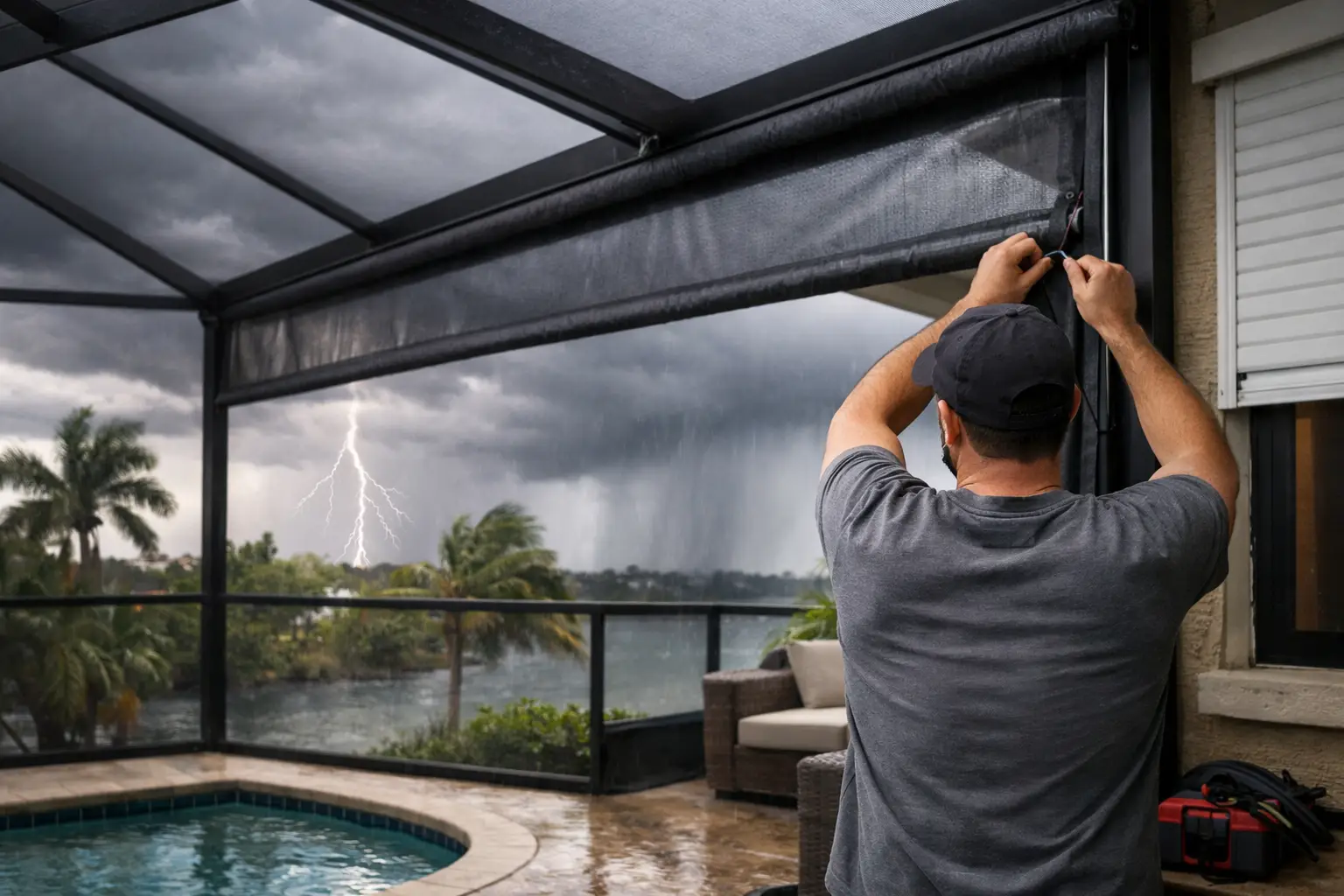
A screen room can make a Florida home far more comfortable, but it is also one of the first exterior features exposed to wind, wind-driven rain, and flying debris. To prepare screen rooms for storms, homeowners need to think beyond the screen mesh itself. Doors, fasteners, roof connections, furniture, drainage, and the surrounding yard all affect how well the enclosure performs when weather turns severe.
A screen enclosure is designed to provide shade, airflow, and insect protection. Unless it has been specifically engineered and permitted as a storm-rated structure, it should not be treated as a hurricane shelter or relied on to stop debris. Good preparation reduces avoidable damage, protects the home around it, and makes post-storm cleanup safer and faster.
Prepare Screen Rooms for Storms Before Watches Are Posted
The best time to inspect a screen room is well before hurricane season reaches the Treasure Coast. Once a storm watch is issued, supplies may be limited, schedules become tight, and it may no longer be safe for a contractor to make repairs.
Start with a careful walkaround of the enclosure. Look at the screen panels for tears, stretching, loose spline, and areas where the mesh has pulled away from the frame. Small openings may seem cosmetic, but they can grow quickly when wind catches the damaged edge. Check the aluminum frame for bent members, corrosion, loose screws, cracked anchors, or movement where posts meet the slab, deck, wall, or roofline.
Pay close attention to the screen room door. A door that does not latch securely can swing violently in high winds, damaging hinges, closers, framing, and adjacent panels. Test the latch, handle, hinges, sweep, and closer. The door should close squarely and stay closed without forcing it into position. If the frame is out of alignment or the latch is unreliable, schedule service before severe weather becomes a concern.
Roofed screen rooms require another level of inspection. Check for loose roof panels, damaged flashing, missing fasteners, water staining, and separation where the structure connects to the home. Water intrusion at these connection points can cause problems that are not visible from inside the room. A skilled professional can identify whether a repair is limited to a screen or fastener issue or whether the enclosure needs more substantial structural attention.
Remove What Wind Can Move
The fastest storm-preparation step is also one of the most effective: clear the room of loose items. Outdoor furniture, planters, decorative pieces, grills, umbrellas, and small appliances can become projectiles if they are left exposed to strong winds.
Move lightweight furniture and accessories inside the home, garage, or another secure storage area. If an item is too large to bring indoors, follow the manufacturer’s guidance for securing it and place it in the most protected location available. Do not assume that placing furniture in a screened enclosure makes it safe. Screen panels are not meant to contain heavy objects during a storm.
Use this time to clear the area immediately outside the screen room as well. Bring in potted plants, pool toys, patio cushions, yard décor, and loose tools. Trim only small, safe-to-reach branches that could scrape the enclosure. For large limbs, leaning trees, or branches near power lines, contact a qualified tree professional. Storm preparation should not create a preventable injury.
Protect the Home Openings Behind the Screen Room
Many homeowners enjoy a screen room that connects directly to sliding glass doors, French doors, or windows. Those home openings still need their own hurricane protection plan. The screen room may reduce everyday sun exposure and keep out insects, but it does not replace approved storm shutters, impact-rated windows, or impact-rated doors.
If your property uses accordion shutters, panels, or another approved protection system, inspect and operate them before storm season. Make sure tracks are clean, fasteners are available, and no stored furniture blocks access. Impact-rated windows and doors should be inspected for damaged glass, worn seals, and hardware issues, but they generally do not require the same last-minute deployment as shutters.
This distinction matters because wind entering the home through a failed door or window can increase internal pressure and contribute to more serious damage. Protecting the primary building envelope remains the priority. The screen room is an outdoor living feature, not a substitute for properly rated storm protection.
Check Drainage and Water Flow
Wind is not the only threat to a screen room. Heavy rain can overwhelm clogged gutters, push water beneath doors, and create pooling around the slab or paver area. Before a storm, remove leaves and debris from gutters, downspouts, drains, and nearby swales where it is safe to do so.
Look for standing water after a normal rain shower. If water regularly collects along the screen room perimeter, near a door threshold, or against the home, it is worth addressing before the next major storm. The solution may involve cleaning a drain, adjusting grading, extending a downspout, or evaluating the patio surface. The right repair depends on the source of the water and the construction of the property.
Avoid sealing intended drainage openings in an attempt to keep rain out. Enclosures and patios are often designed to shed water through specific paths. Blocking those paths can trap water where it does not belong.
What to Do When a Storm Is Approaching
When a hurricane watch or tropical storm watch is announced, work from a written checklist and complete exterior tasks early. Conditions can change quickly, especially when afternoon rain bands begin moving through the area.
First, remove all loose contents from the screen room and nearby patio. Close and latch the screen room door, then deploy approved protection over the home’s windows and doors according to your storm plan. Photograph the enclosure, roof connections, screens, and outdoor equipment after preparation is complete. Clear photos can be useful for documenting the condition of the property if damage occurs.
Do not remove screen panels or attempt to dismantle the aluminum frame unless a qualified professional has given you a specific recommendation for your structure. Improper removal can leave sharp edges, damage the frame, or make it harder to secure the area before the storm arrives. It can also expose attached doors, windows, or patio spaces to more debris.
If you notice a loose roof panel, unstable frame member, or damaged electrical component in the room, stay clear of it and arrange professional guidance as soon as conditions allow. Temporary fixes made in high winds are rarely safe or dependable.
Inspecting a Screen Room After the Storm
Wait until local conditions are safe before entering the enclosure. Look first from a distance for downed power lines, sagging roof sections, broken glass, sharp metal, or structural movement. If there is any question about the stability of the room, keep people and pets away until it can be evaluated.
Once it is safe, document visible damage with photos before moving debris. Check screens, doors, posts, base tracks, anchors, roof panels, gutters, and connections to the home. Look for water stains around attached walls and doors, even if the damage appears minor. Small leaks can become larger repair issues if they are ignored after the storm.
Do not pressure wash damaged screens or try to force a bent door back into alignment. Replacement mesh, new spline, hardware repairs, rescreening, and frame service may be straightforward when addressed early. Structural movement, corroded anchors, or roof damage deserve a professional inspection to determine the safest repair path.
When Professional Service Is the Better Choice
A homeowner can often handle routine cleaning and remove outdoor contents before a storm. Repairs involving the enclosure frame, roof connections, door alignment, anchoring, or extensive screen damage call for experienced installation professionals. Coastal Florida conditions place ongoing stress on aluminum structures through salt air, heat, moisture, and seasonal storms.
Jensen Beach Aluminum & Windows helps property owners evaluate screen rooms, lanais, pool cages, and related exterior features with practical recommendations based on the condition of the structure and the needs of the property. Premium materials and precision installation matter most when an enclosure must perform year after year, not simply look good on the day it is installed.
A well-maintained screen room cannot control the weather, but it can eliminate the weak points that turn a manageable storm into an expensive exterior repair. Schedule inspections and needed service early, keep your storm plan current, and give your outdoor living space the same attention you give the rest of your home.