


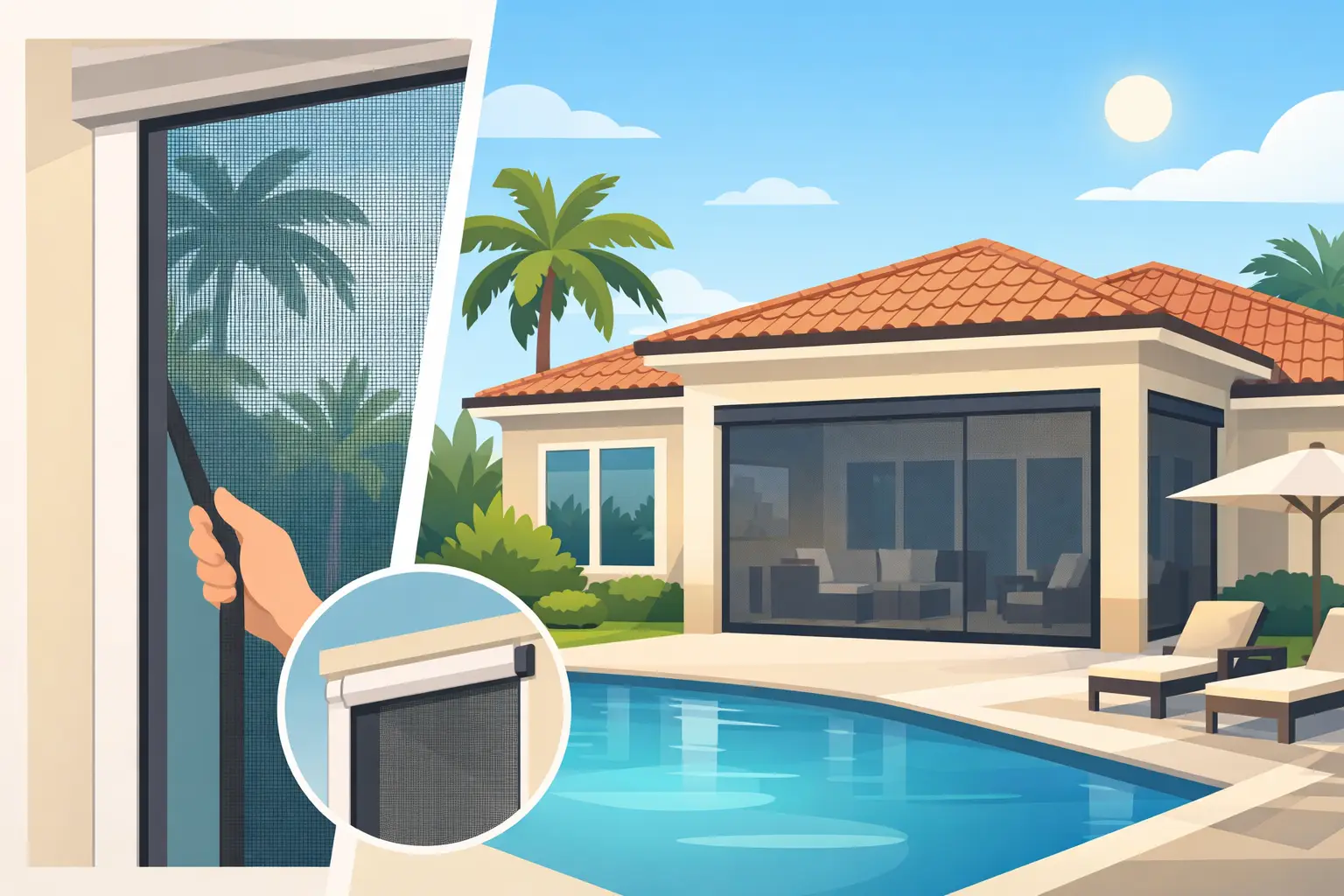
A Florida patio can be perfect at 5:30 p.m. and uncomfortable by 5:45. Mosquitoes arrive, the sun cuts across the seating area, and a light breeze turns into wind-driven debris during an afternoon storm. A retractable screen systems review should start there: these products are designed to make outdoor areas more usable when conditions call for protection, then disappear when homeowners want an open view.
For Treasure Coast homes, retractable screens can be an excellent upgrade for lanais, covered patios, outdoor kitchens, garage openings, and large doorways. They are not a replacement for hurricane shutters, impact-rated windows, or a properly engineered enclosure. Their value comes from flexibility, comfort, and a clean finished appearance when the right system is specified and professionally installed.
What Retractable Screen Systems Do Well
Retractable screen systems use a housed screen that extends across an opening manually or by motor. When retracted, the mesh rolls into a cassette or housing, keeping it protected from sun exposure, dirt, and day-to-day wear. When lowered or pulled into place, it creates a barrier against insects, glare, and, depending on the mesh selected, a portion of heat and wind-blown debris.
The strongest advantage is control. Traditional fixed screens are always visible and permanently close off an opening. Retractable screens give homeowners the choice to keep a patio, lanai, or opening fully open when weather is pleasant and screened when bugs or low-angle sun become a problem. That flexibility is especially valuable in Florida, where outdoor spaces are used throughout much of the year.
They can also improve the function of spaces that are difficult to enjoy at certain times of day. A solar mesh can reduce glare in a west-facing outdoor kitchen. An insect mesh can make evening dining more comfortable. A privacy-focused mesh can provide added separation between neighboring properties without building a solid wall.
For commercial properties, retractable screens can help outdoor dining areas, clubhouse patios, poolside spaces, and amenity areas remain more comfortable for guests. The screen can be deployed during peak sun or insect activity and stored away for events, views, or cooler conditions.
Retractable Screen Systems Review: The Trade-Offs
A quality retractable screen is a specialized opening system, not simply fabric stretched in a frame. Its long-term performance depends on the housing, guide tracks, tension system, mesh, motor components when applicable, and the structure supporting it. That is why product selection and installation matter as much as the screen itself.
The first trade-off is wind. Screens can reduce the impact of a breeze, but they should not be treated as storm protection. High winds place major pressure on mesh and tracks, particularly on wide openings. Some systems are engineered with reinforced tracks and features intended to hold the screen in place during moderate wind, but every installation has limits. A screen should be retracted before severe weather unless the manufacturer specifically states otherwise.
The second trade-off is visibility versus shade. Fine insect mesh usually offers the clearest outward view and best airflow, but it provides less solar control. Denser solar mesh can reduce heat and glare more effectively, yet it darkens the opening and may slightly reduce air movement. Privacy mesh offers greater screening from outside view but will naturally limit visibility from inside as well.
There is also a maintenance consideration. Retractable systems are protected when closed inside their housings, but Florida’s salt air, humidity, pollen, sand, and frequent rain still require attention. Tracks should be kept clear, mesh should be cleaned according to manufacturer recommendations, and motorized systems should be inspected if operation becomes noisy, uneven, or slow.
Where These Systems Make the Most Sense
Retractable screens work best where an opening needs to serve more than one purpose. A covered lanai may be open and airy during the day, then need insect protection at night. A patio opening may need shade in the afternoon without permanently blocking the view of a pool or landscaping. A large garage opening can become a breezy entertainment area when protected from mosquitoes.
They are also a practical option for homes with folding or sliding glass doors. When the doors are open, the screen can create an added layer of comfort without installing a permanent fixed screen across the full opening. For homeowners investing in pergolas or louvered roof systems, retractable screens can add shade, insect control, and privacy at the perimeter while preserving the open-air design.
However, they are not always the best fit. If a homeowner wants a permanently enclosed, fully screened area with continuous protection, a traditional pool cage, lanai enclosure, or fixed screen panel system may offer better value. If the primary concern is storm safety, impact-rated products and code-compliant hurricane protection should take priority. A professional consultation should identify the purpose of the opening before recommending a screen solution.
Choosing the Right Mesh and Operation
The mesh selection should match how the space is used. Standard insect mesh is often the right choice for a porch, lanai, or garage opening where airflow and bug control are the main goals. Solar mesh is better suited to patios and outdoor living areas exposed to strong afternoon sun. Specialty privacy or pet-resistant mesh may be appropriate in specific locations, although heavier materials can affect visibility and system operation.
Manual retractable screens are often a suitable choice for smaller openings and homeowners who prefer simple operation. Motorized systems are generally more convenient for larger spans, frequently used patios, and openings that are difficult to reach. With the touch of a wall control or remote, a motorized screen can lower evenly across a large opening. That convenience is valuable, but it also adds electrical and service considerations that should be planned before installation.
For any system, accurate measurements are essential. Openings that appear square can have minor variations in framing, concrete, or columns. Tracks must be aligned carefully, attachment points must be secure, and the housing needs appropriate clearance. A properly fitted screen should operate smoothly and sit cleanly when retracted rather than looking like an afterthought attached to the exterior.
Florida Installation Details That Matter
Coastal installation experience is particularly important because Florida conditions are hard on exterior components. Aluminum frames and housings should be selected for durability in heat, rain, and humid conditions. Fasteners and mounting methods should be appropriate for the substrate, whether the screen is being installed into concrete, masonry, aluminum framing, wood, or a finished outdoor structure.
The placement of the cassette also affects performance and appearance. A screen housing should be protected where possible, remain accessible for service, and complement the lines of the patio or lanai. Color matching can make a substantial visual difference, especially on front-facing areas or refined outdoor kitchens where homeowners have invested in finishes, pavers, furniture, and lighting.
Homeowners should ask the installer how the screen will behave during routine wind, what the manufacturer recommends during storms, how the system is cleaned, and what service support is available after installation. Clear answers to these questions are more valuable than a low initial price alone.
Is a Retractable Screen Worth the Investment?
For many Florida property owners, the answer is yes when the goal is to use outdoor space more often without giving up an open view. The system can help turn a patio that is only comfortable for part of the day into a space for evening meals, weekend gatherings, and everyday relaxation. It may also support property appeal by giving outdoor areas a more finished, intentional design.
The investment makes less sense when expectations are unrealistic. A retractable screen will not turn an exposed patio into a hurricane shelter, eliminate all heat, or replace a permanent enclosure in every situation. It performs best as one part of a broader outdoor living plan that may include shade structures, impact protection, quality doors, proper drainage, and durable exterior materials.
At Jensen Beach Aluminum & Windows, skilled professionals can evaluate the opening, discuss mesh and operation options, and recommend a screen system that fits the way you use your property. The best choice is the one that protects your comfort without compromising the coastal views and open-air living that made the space worthwhile in the first place.