


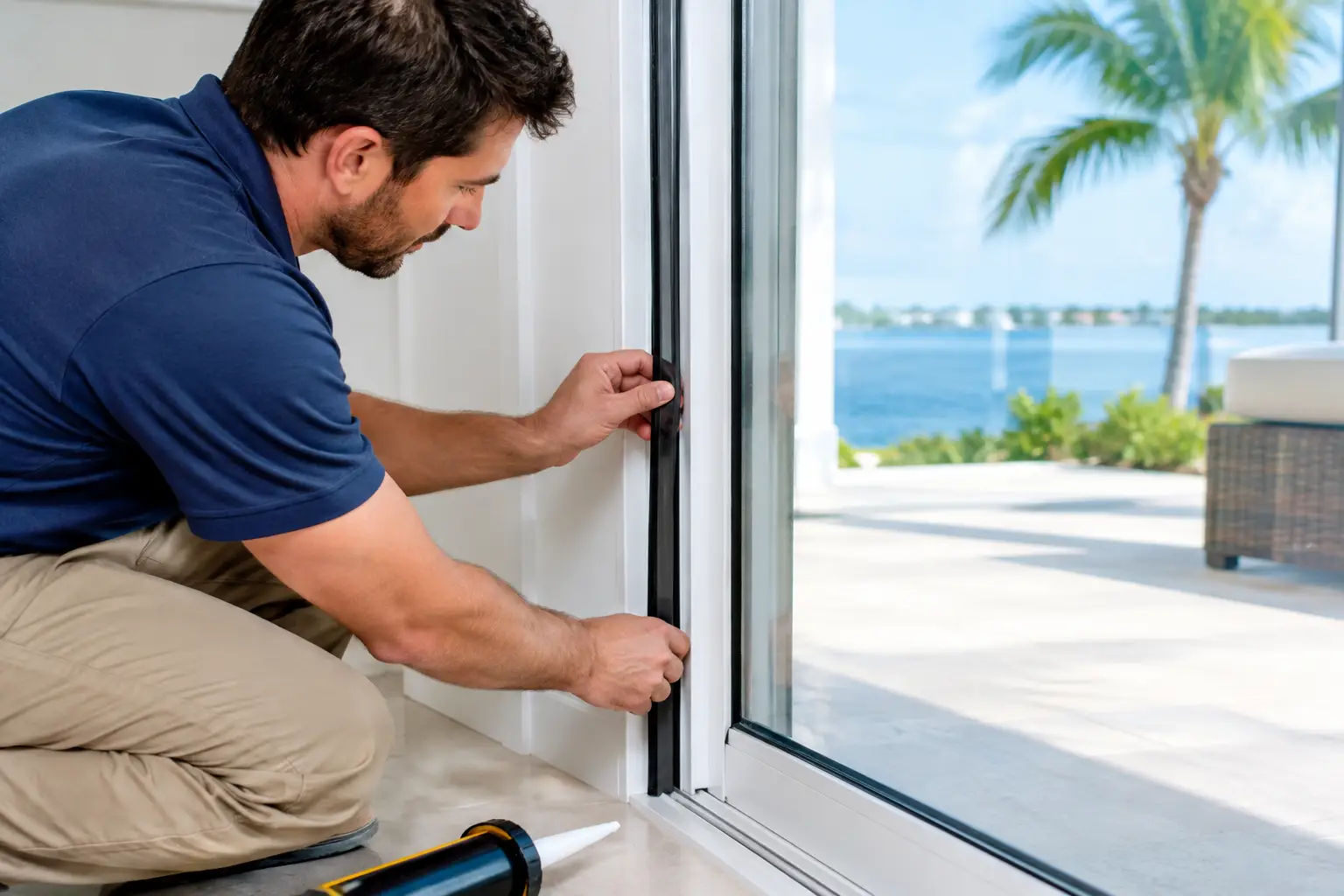
A sliding glass door should let in Florida sunshine, not wind-driven rain, humid air, insects, or expensive cooled air. Knowing how to seal sliding glass doors starts with identifying where the problem is coming from. A draft around the panels, water near the track, a rattling door, or condensation on the glass can all point to a worn seal, a drainage issue, or a door that is no longer properly aligned.
For Treasure Coast homes, this work is about more than comfort. A properly sealed sliding door supports energy efficiency, protects surrounding finishes from water intrusion, and helps your home perform better through heavy rain and tropical weather. The right repair depends on the door’s condition, how it was installed, and whether the issue is limited to weatherstripping or signals a larger problem.
Start by Finding Where the Door Is Leaking
Before applying caulk or replacing weatherstripping, inspect the entire door system. Sliding glass doors have several potential entry points, including the meeting rail where the two panels close, the top and bottom tracks, the exterior frame, fixed-panel edges, and weep holes that drain water from the sill.
Check the door during the day with interior lights off. Look for visible daylight around the edges of the moving panel. On a dry day, run your hand slowly around the closed door to feel for moving air. You may also notice signs of moisture damage, such as stained flooring, swollen trim, peeling paint, or mildew near the frame.
Water testing can help, but it must be done carefully. With one person inside, lightly spray water on one section of the exterior frame at a time. Do not blast the door with a high-pressure hose. Heavy pressure can force water past components that would otherwise perform normally in rain. If water appears inside, note its exact location. Water entering at the sill may have a different cause than water appearing along the side jamb.
Clean the Tracks and Weep Holes First
A sliding door cannot seal correctly if it is packed with sand, pet hair, leaves, or built-up debris. Coastal Florida conditions make track maintenance especially important. Dirt can keep the panel from closing tightly, wear down rollers, and block the drainage channels designed to direct water outside.
Vacuum the upper and lower tracks, then wipe them with a mild cleaner and a soft brush. Avoid harsh abrasives that can damage finishes or scratch the track. Inspect the exterior sill for small weep holes or slots. These openings are supposed to remain clear. They allow incidental water in the track to drain outward instead of overflowing into the home.
Do not caulk over weep holes to stop water. Blocking them can trap moisture inside the frame and make a small issue much worse. If the door regularly holds standing water even after cleaning, the sill may be obstructed, the door may be out of level, or the installation may need professional evaluation.
Replace Worn Weatherstripping and Door Sweeps
Weatherstripping is usually the first line of defense against air leaks. Over time, pile weatherstripping, vinyl fin seals, foam, and rubber components can flatten, crack, pull away, or become too dirty to make solid contact. Florida heat and ultraviolet exposure can shorten the service life of these materials.
Open the door and inspect the weatherstripping along the vertical edges, header, and bottom of the sliding panel. If it looks crushed, brittle, missing, or uneven, replacement is often warranted. The replacement must match the door’s profile and thickness. Generic products may appear similar but fail to reach the mating surface, interfere with smooth operation, or wear quickly.
The bottom seal deserves close attention. Some doors use a sweep or fin seal that contacts the sill as the panel closes. If that component is damaged, you may feel a draft near the floor or see insects entering around the bottom corners. Replacing it can improve comfort, but it will not correct a door that has dropped out of alignment.
Check Whether the Door Is Closing Squarely
When a sliding panel drags, sticks, rattles, or requires force to latch, the rollers may need adjustment or replacement. A panel that sits too low or leans slightly can create gaps that new weatherstripping cannot solve.
Most sliding doors have roller adjustment screws near the lower corners of the moving panel. Small adjustments can raise or lower the panel until it closes evenly against the frame. This should be done gradually and with care. Over-adjusting can cause binding, damage the rollers, or prevent the lock from engaging correctly.
If the panel is heavy, difficult to remove, or uses corroded hardware, professional service is the safer choice. Sliding glass panels are large and fragile, and older doors can conceal damaged rollers, worn tracks, or frame problems. Skilled professionals can assess operation, replace compatible components, and restore a proper seal without creating new issues.
Use Exterior Caulk Only Where It Belongs
Exterior sealant has an important role, but it is not a cure-all. Caulk is typically used at specific exterior joints between the door frame and surrounding wall or trim, where approved by the door manufacturer and appropriate for the installation. It can help prevent water from entering through gaps in the exterior perimeter.
Remove loose, cracked, or separated caulk before applying new material. The surface must be clean, dry, and sound for the sealant to adhere properly. Choose a high-quality exterior-grade sealant rated for Florida sun, moisture, and temperature changes. Apply a continuous, neat bead only to the intended joint.
Avoid caulking moving parts, tracks, drainage paths, and areas where the door frame is designed to flex or release water. Caulk in the wrong place can make the door hard to operate, trap water, and conceal an installation concern that deserves attention.
Understand When the Glass Seal Has Failed
Not every sealing issue occurs around the door frame. Modern insulated glass units have a perimeter seal between panes. When that seal fails, humid air can enter the space between the glass, creating persistent fogging, haze, or moisture that cannot be wiped from either surface.
A failed insulated-glass seal affects appearance and can reduce insulating performance, but it is different from a draft around the sliding panel. In some cases, the glass unit can be replaced without replacing the entire door. Whether that is practical depends on the door’s age, frame condition, availability of matching glass, and current wind-load or impact requirements.
For homes in hurricane-prone areas, any replacement decision should also consider the door’s overall protective performance. A newer impact-rated sliding glass door may offer improved structural strength, upgraded glazing, better hardware, and more dependable weather resistance compared with an aging non-impact system.
When Sealing Is Not Enough
Maintenance and targeted repairs make sense when the frame is sound, the glass is in good condition, and the door operates properly after service. Replacement may be the better investment when there is recurring water intrusion, corrosion, warped framing, damaged tracks, failed glass seals, or a door that no longer meets your property’s storm-protection needs.
Warning signs that deserve a professional inspection include water appearing inside during ordinary rain, soft or damaged wall materials around the opening, visible frame separation, repeated roller failure, or locking hardware that will not secure the panel. These issues can indicate more than worn weatherstripping.
At Jensen Beach Aluminum & Windows, our skilled professionals help property owners evaluate the full condition of their sliding glass doors, from seals and rollers to glass, frames, and storm-readiness. A precise assessment helps avoid temporary fixes that leave a home vulnerable during the next heavy rain.
Protect the Door With Routine Care
Once you seal a sliding glass door correctly, regular attention will help it stay that way. Clean the tracks and drainage openings several times a year, particularly after storms or landscaping work. Inspect weatherstripping before hurricane season, and address difficult operation before it turns into damaged rollers or a panel that will not lock.
A sliding glass door is one of the largest openings in your home. Treating small drafts, worn seals, and drainage concerns early can preserve comfort, protect interior finishes, and give you greater confidence when Florida weather changes quickly. If the source of a leak is unclear, a professional inspection is the most reliable next step.