


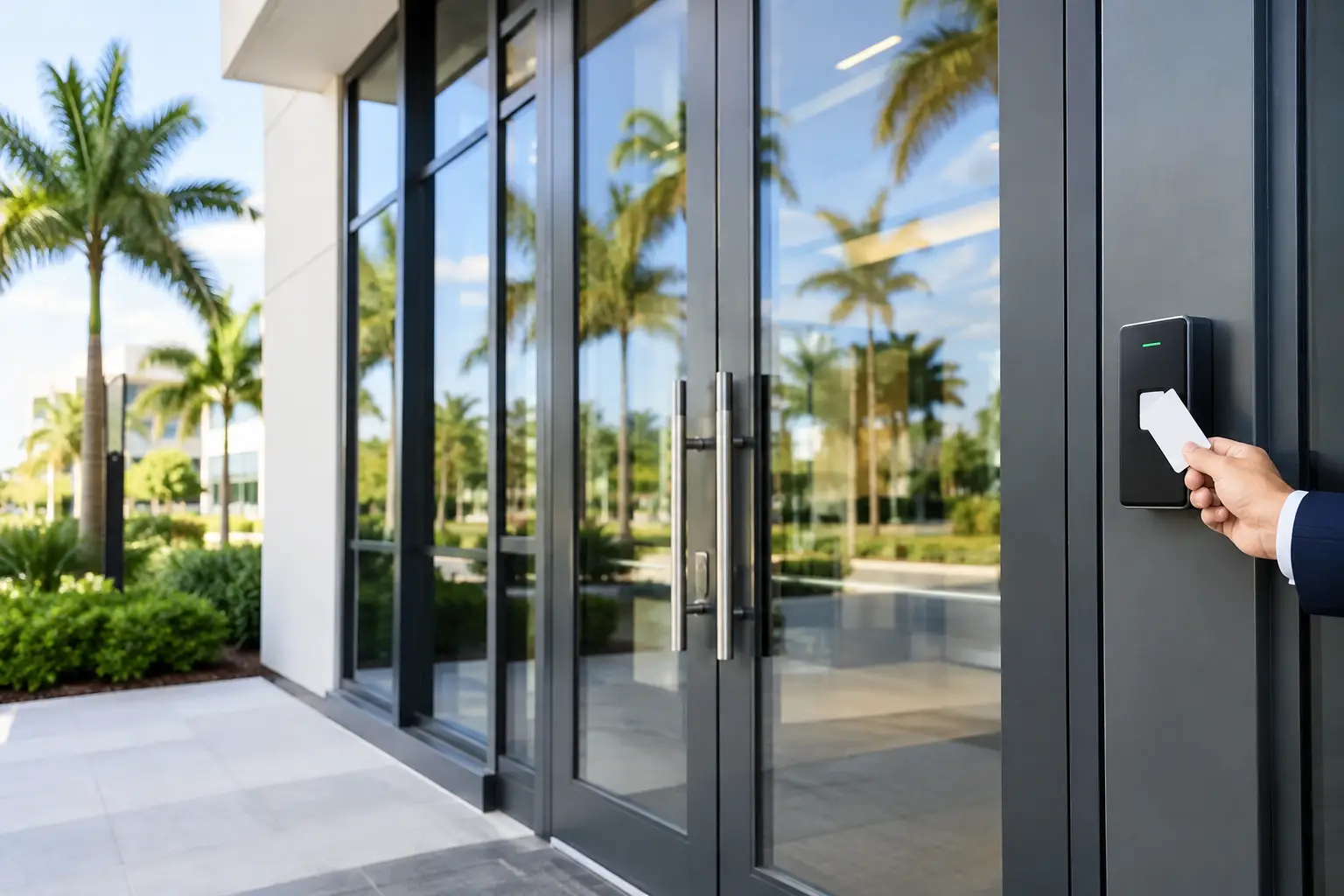
A commercial entry has to do more than look professional at 8:00 a.m. It has to stand up to constant traffic, deter unwanted access, operate reliably in humid coastal conditions, and help protect the building when severe weather approaches. Secure commercial entrances bring those needs together, giving Florida property owners and managers a stronger first line of defense without sacrificing curb appeal or daily convenience.
For offices, medical facilities, retail centers, restaurants, multifamily buildings, and industrial properties, the right entrance system is a long-term operational decision. The door, frame, glazing, hardware, locks, and installation all need to work as one system. A weak point in any one of those areas can affect security, energy use, accessibility, and maintenance costs.
What Makes a Commercial Entrance Secure?
Security begins with a clear understanding of how the entrance will be used. A storefront door that welcomes customers all day has different requirements than a side entrance used only by employees, a delivery entrance, or a secured lobby in a residential community. The most effective solution matches the door system to the building’s traffic, exposure, and security priorities.
The door itself should be built for commercial use, with a durable frame and properly rated glass where glass is part of the design. Aluminum entrance systems remain a practical choice for many Florida properties because they offer strength, corrosion resistance, and a clean appearance. In coastal areas, material selection matters. Salt air, moisture, and sun exposure can wear down finishes and hardware faster than many owners expect.
The frame and anchoring are just as important as the door panel. A quality door installed in an undersized frame or poorly secured opening can shift over time, creating gaps, sticking issues, and a weaker barrier against forced entry. Precision installation helps the system close, latch, and seal as intended from the first day of use.
Start With the Risks at Your Property
Before selecting a new entry system, consider what your property needs to manage on a typical day and during an emergency. A busy retail front may need excellent visibility, easy access, and reliable panic hardware. A professional office may need controlled employee access after hours. A coastal property may also need impact-rated components designed for local wind-borne debris requirements.
Security is rarely about choosing the heaviest possible door. It is about choosing the right level of protection for the location. Solid metal doors can be an excellent fit for back-of-house areas and service corridors, while glazed aluminum doors may be a better choice for a visible main entrance where natural light and presentation matter. The glass, locks, hinges, closers, and frame must support the same performance goal.
Property managers should also look at how people approach the building. Poor lighting, obstructed sightlines, damaged walkways, and overgrown landscaping can make an otherwise secure entrance more vulnerable. A well-planned entry makes authorized visitors feel welcome while making it harder for unauthorized individuals to go unnoticed.
Door Hardware Is a Security Decision
Commercial door hardware takes more abuse than most building components. It is operated hundreds or thousands of times each week, often by people carrying packages, pushing carts, or entering quickly during rain. Choosing hardware based on appearance alone can lead to expensive repairs and early replacement.
A dependable entry commonly combines commercial-grade hinges or pivots, a properly adjusted door closer, a durable latch or lockset, and an exit device where required. For doors serving an occupied space, panic hardware may be required by code so occupants can exit quickly in an emergency. These devices need professional selection and installation. A door that is difficult to open or does not positively latch is both a security concern and a potential life-safety issue.
Electronic access control can add another layer of protection for employee-only or restricted areas. Key cards, fobs, keypad codes, and mobile credentials allow businesses to limit access by time, user, or location. They can also reduce the disruption of rekeying when an employee leaves or a credential is lost. Still, electronic access control is not a substitute for a strong physical door and frame. The system is only as dependable as the entrance it secures.
Florida Weather Changes the Conversation
On the Treasure Coast, commercial entrances must account for more than security and traffic. Intense sun, driving rain, high humidity, and hurricane conditions all influence which products and installation methods make sense. Water intrusion around an entry can damage interior finishes, create slip hazards, and contribute to hardware corrosion. Heat transfer through poorly performing glass can also make entry areas less comfortable and place added demand on the building’s cooling system.
For properties in areas subject to hurricane design requirements, impact-rated doors and glazing may be appropriate or required, depending on the building location and applicable code. These systems are engineered and tested to resist specific wind pressures and impact conditions. It is essential to verify product approvals, installation requirements, and local permitting before work begins. A product may be high quality but still be unsuitable for a particular opening or jurisdiction.
Weather protection also depends on details that are easy to overlook. Proper flashing, sealants, thresholds, drainage paths, and frame attachment help manage wind-driven rain. Door sweeps and weatherstripping should create a reliable seal without making the door difficult to operate. This is where experienced installation makes a measurable difference over the life of the entrance.
Balance Security With Accessibility and Appearance
A secure entrance should not make it difficult for customers, tenants, or visitors to enter. Door width, threshold height, opening force, maneuvering clearance, and hardware placement may be governed by accessibility requirements. These considerations should be addressed early, especially when replacing doors in an occupied commercial building.
Appearance matters, too. The entrance sets expectations before a visitor reaches the reception desk or showroom floor. Clean aluminum sightlines, well-chosen finishes, quality glass, and coordinated hardware can reinforce the care a business puts into its property. For retail and hospitality spaces, visibility may be central to the design. For a medical office or professional building, privacy glass or a more controlled entry sequence may be the better fit.
There is often a trade-off between openness and privacy, or between heavy-duty hardware and a more refined look. A qualified contractor can help identify combinations that meet the building’s practical needs without making the entrance feel institutional or out of place.
Installation and Maintenance Protect the Investment
Even premium commercial doors need periodic attention. Closers can fall out of adjustment, weatherstripping can compress, fasteners can loosen, and locks can show signs of wear. Small issues should be addressed early. A door that slams, drags, sticks, or fails to latch can quickly become a service interruption or security gap.
A practical maintenance plan includes regular checks of door alignment, hinges or pivots, latch engagement, closer speed, thresholds, glass condition, weather seals, and access-control operation. In coastal locations, cleaning and inspecting exposed hardware is especially worthwhile because salt residue can accelerate corrosion. Maintenance should be scheduled around the building’s use, with high-traffic entrances inspected more frequently than rarely used doors.
When replacing an existing entrance, avoid treating the project as a simple door swap. The condition of the surrounding opening, wall construction, drainage, glazing, and adjacent storefront components should be evaluated. Addressing those conditions upfront can prevent repeat repairs after the new system is installed.
Choose a Partner Who Understands Coastal Commercial Work
Commercial entrance work requires careful field measurement, code awareness, reliable products, and skilled installation. It also requires coordination. Businesses cannot always close their front door for days at a time, so installation planning should account for customer access, safety, security, and the daily operation of the property.
Jensen Beach Aluminum & Windows helps Florida property owners evaluate doors, glazing, storm protection, and exterior improvements with the realities of coastal construction in mind. The goal is not simply to install a new entrance. It is to provide a system that supports security, weather readiness, durability, and the professional image of the property.
If your commercial entrance shows signs of wear, has outdated hardware, or no longer provides the protection your building needs, a professional on-site evaluation is a smart next step. The right recommendation can turn a daily point of vulnerability into a dependable part of your property’s long-term protection plan.