


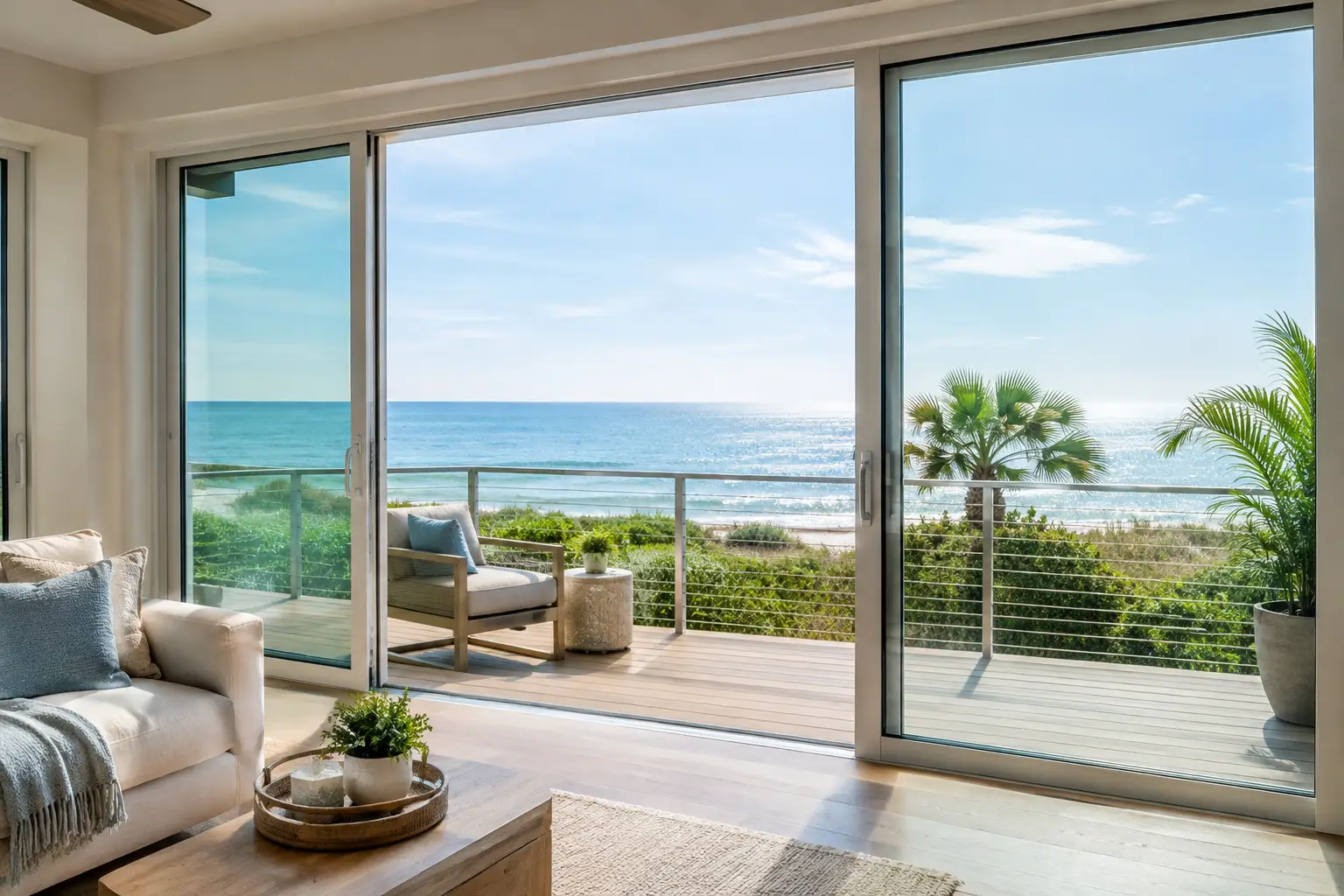
A sliding door should do more than create a wide, attractive view of the pool, patio, or lanai. In Florida, sliding doors are part of your home’s exterior protection system. They must stand up to intense sun, wind-driven rain, salt air near the coast, daily use, and the possibility of severe storms. The right door can make a living space brighter and more comfortable. The wrong one can become a source of water intrusion, difficult operation, air loss, and avoidable worry when a storm is approaching.
For homeowners and property managers on the Treasure Coast, choosing a patio door is not simply a matter of frame color or glass style. It is a decision that should account for your building requirements, exposure, lifestyle, and long-term maintenance expectations.
What Florida Sliding Doors Need to Handle
Florida’s climate puts more pressure on exterior openings than many homeowners realize. A door facing the ocean, a canal, or an open backyard may receive stronger wind and more salt exposure than a door protected by neighboring homes or landscaping. Direct afternoon sun can also raise interior temperatures and put added strain on finishes, seals, and rollers.
A quality sliding glass door is designed as a complete assembly. The frame, glass, interlocks, weatherstripping, sill, rollers, locks, and installation method all affect its performance. A strong glass panel alone cannot compensate for a poorly prepared opening or an improperly flashed sill.
Water management deserves particular attention. During a Florida downpour, the track must direct water outward while the sill, weep system, and surrounding wall connection keep water from reaching interior finishes. In coastal construction, small installation shortcuts can become major repair costs over time. That is why professional measurement, proper anchoring, and careful sealing are as important as the product itself.
Hurricane-Rated Sliding Doors and Other Protection Options
If your property is located in a wind-borne debris region or subject to local impact requirements, hurricane-rated sliding doors may be necessary. These doors are tested to resist specified wind pressures and, when impact-rated, are designed to withstand projectile impact without allowing a dangerous opening in the building envelope.
Impact sliding doors offer a practical benefit beyond storm season: the glass remains in place after an impact event, helping protect occupants and interior contents from wind and rain. Many homeowners also appreciate the additional security and the reduced need to install separate panels before every storm. However, impact glass is an investment, and it is not the only approach for every property.
In some situations, a code-compliant non-impact door paired with approved hurricane shutters may be the better fit for the budget, existing protection plan, or property design. Accordion shutters, for example, can provide dedicated storm coverage for large openings. The right answer depends on local code, the door’s location, the protection already in place, and how much convenience matters to you.
Before making a selection, ask for documentation that matches the product to the required design pressures and approvals for your project. A qualified contractor can help identify what applies to your specific address rather than relying on assumptions based on a neighboring home.
Do Not Overlook the Frame and Hardware
The glass gets most of the attention, but the frame and operating hardware carry the daily workload. Aluminum frames are a popular choice in Florida because they are durable, low-maintenance, and well suited to large openings. Premium frame systems can also provide stronger reinforcement, better drainage details, and more refined finishes.
Rollers should glide smoothly without requiring a hard pull or lift. Stainless steel or corrosion-resistant hardware matters even more near saltwater, where ordinary components can deteriorate sooner. Multi-point locking systems and solid handles improve security and help the panels close tightly against the weatherstripping.
A door that drags, rattles, or resists locking should not be treated as a minor inconvenience. It may signal worn rollers, track damage, alignment issues, or frame movement. Addressing the cause early can extend the life of the door and prevent damage to the panels or track.
Energy Efficiency Is About More Than Tinted Glass
Large glass doors bring daylight into a home, but they can also admit solar heat. The goal is not to eliminate natural light. It is to select glass that manages heat gain while preserving the view and comfort that make a patio opening worthwhile.
Low-E coatings, insulated glass units, and appropriate tint options can reduce heat transfer and help limit fading on flooring, furniture, and window treatments. The best configuration depends on orientation. A west-facing opening with strong afternoon exposure may benefit from a different glass choice than a shaded opening under a covered lanai.
Frame color and surrounding shade also affect performance. Dark finishes can become very hot in direct sun, while awnings, pergolas, retractable screens, and covered outdoor areas can reduce the sun hitting the glass in the first place. For many Florida homes, comfort comes from combining an efficient door with thoughtful exterior shading.
Energy performance should be evaluated realistically. A new sliding door can help reduce unwanted heat and air leakage, but results also depend on the rest of the home, including insulation, HVAC condition, roof exposure, and other windows. A dependable contractor will discuss those factors honestly rather than promise a specific utility-bill reduction.
Choosing the Right Configuration for Your Space
Two-panel sliding doors remain a dependable choice for many patios and smaller openings. One panel stays fixed while the other slides, creating a straightforward, space-saving transition outdoors. For wider views, three- and four-panel configurations can create a more open feel and bring substantially more light into the room.
Pocketing and corner-opening systems make a dramatic architectural statement, but they require more planning. The wall structure, drainage strategy, screen solution, budget, and exposure to weather all need close review. Larger panels are heavier, which makes product quality and precise installation especially important.
Think about how the door will be used on an ordinary day. A family that carries food to the pool area, moves patio furniture, or welcomes frequent guests may benefit from a larger opening. A rental property may prioritize durable hardware and easy operation. A ground-floor opening near a busy walkway may need added privacy measures or integrated screening.
Screens are another practical consideration. Standard insect screens support airflow, while retractable screens can disappear when not needed and are often useful for wide openings. If your lanai or patio is already enclosed, the door selection should work with that outdoor environment rather than compete with it.
Installation Determines How the Door Performs
Even premium sliding doors can underperform when installation is rushed. The opening must be accurately measured and inspected for damage, rot, movement, or existing water issues. The threshold needs proper support and slope, the frame must be square and plumb, and the anchors must be selected and placed according to the approved installation requirements.
Professional installers also verify panel operation, lock engagement, drainage, and exterior sealing before the project is complete. They protect interior finishes during removal and leave the jobsite clean, but their value goes beyond appearance. Their work helps ensure the door performs as it was tested and intended to perform.
For replacement projects, be wary of a quote based only on rough dimensions or a quick visual estimate. An accurate proposal should reflect the door configuration, glass package, hardware, removal needs, exterior finish work, permits when required, and any storm-protection considerations. Clear scope protects you from surprises later.
When Repair Makes Sense and When Replacement Is Smarter
Not every problem requires a new door. Dirty tracks, worn rollers, minor alignment problems, and failed handles can often be repaired when the frame and glass remain in good condition. Regular cleaning of the track and drainage channels can also improve operation and prevent grit from wearing down the rollers.
Replacement is often the wiser choice when there is persistent water intrusion, corrosion that affects the frame, cloudy insulated glass, cracked panels, poor security, repeated repair needs, or a door that no longer meets the property’s storm-protection needs. Older doors may also lack the energy performance, drainage design, and hardware quality available in current systems.
The decision should be based on the door’s condition and your long-term plan for the property, not just the lowest immediate cost. If a major renovation, exterior upgrade, or storm-protection project is already planned, replacing an aging patio door at the same time can avoid duplicated labor and mismatched finishes.
A Better Starting Point for Your Door Project
Bring photos of the existing opening, note whether the door faces open water or direct sun, and consider how you use the space during storm season and throughout the year. Those details help turn a broad product conversation into a recommendation that fits your property.
Jensen Beach Aluminum & Windows can help homeowners and property managers evaluate premium door options, hurricane protection needs, and professional installation requirements with the care coastal properties demand. A well-chosen door should feel easy to use every day, look right with your home, and provide confidence when Florida weather turns serious. Start with a detailed on-site evaluation, because the best sliding door is the one designed for the exact opening it will protect.