




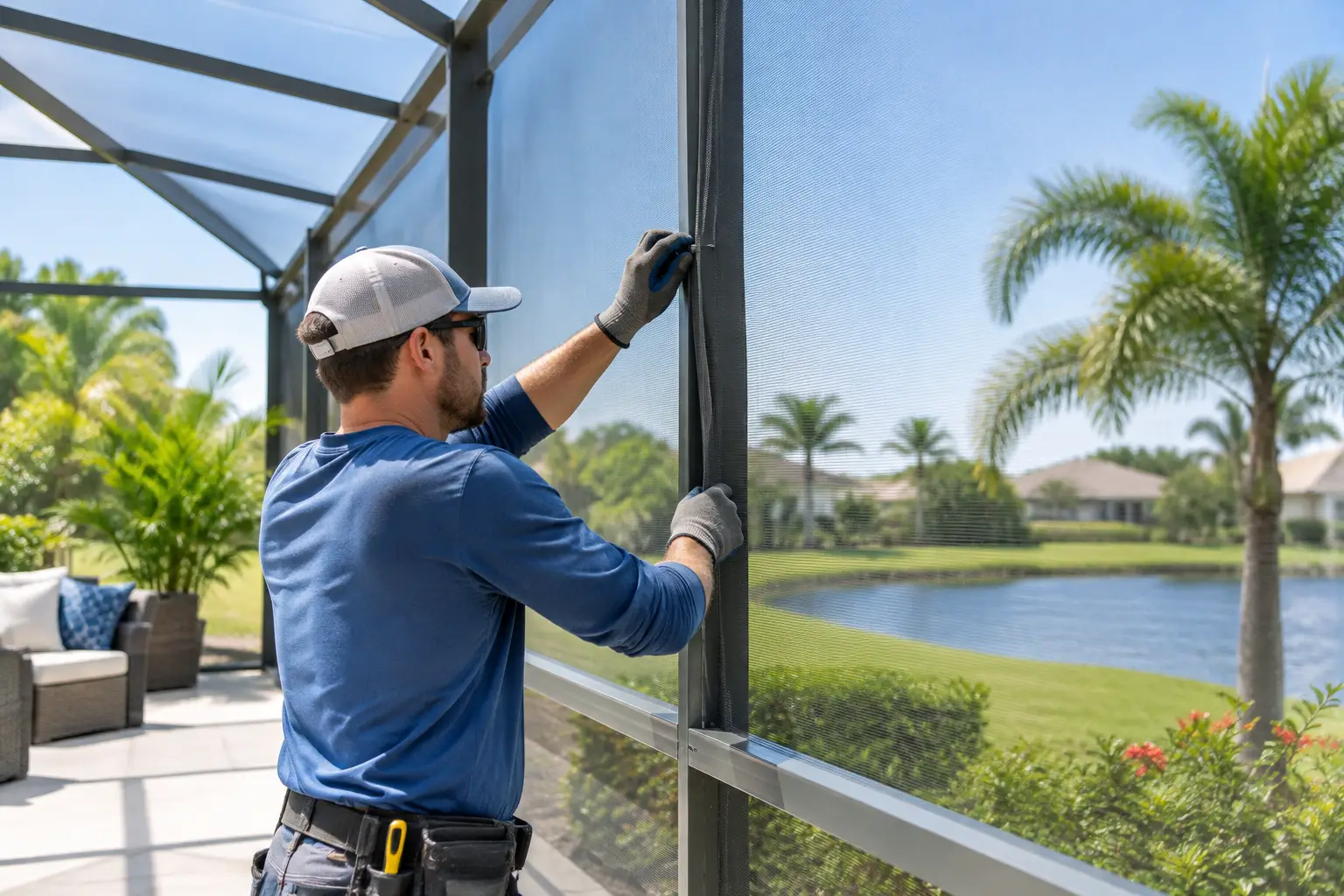
A torn screen may look like a small maintenance issue, but on a Florida lanai or pool enclosure, it can quickly change how the entire space performs. Insects get in, leaves collect around the pool, pets find weak spots, and a once-comfortable outdoor area becomes harder to enjoy. This rescreening patio enclosure guide explains how to assess your enclosure, choose the right screen material, and decide when professional installation is the better long-term investment.
When a Patio Enclosure Needs Rescreening
Most homeowners first notice a single rip, loose edge, or panel that has pulled away from the spline. Those visible problems matter, but they are not the only signs that a rescreen is due. Screen material can become brittle from years of sun exposure, especially on south- and west-facing enclosures. When it feels dry, faded, or stiff to the touch, a patch may only delay the larger job.
Look closely at the enclosure after a heavy rain or windy afternoon. Screens that sag, flutter excessively, or allow debris to blow through are no longer providing the clean, protected outdoor environment they should. Small openings near the roofline, doors, or lower wall panels can also allow mosquitoes, no-see-ums, lizards, and other pests into the enclosure.
For a pool cage or large lanai, it is often more practical to rescreen all panels at once when several sections are failing. New material will have a more consistent appearance and tension, and you avoid paying for repeated service visits as neighboring aged panels begin to tear.
Screen damage versus frame damage
Screen replacement solves problems with the mesh, spline, and panel tension. It does not correct a bent aluminum member, loose fastener, corroded anchor, failing door closer, or damaged concrete footing. Coastal Florida properties deserve a closer inspection because salt air, moisture, and storm exposure can accelerate wear on metal components.
If the frame moves when pressed, shows corrosion around connections, or has been struck by a fallen limb, have a skilled professional evaluate it before installing new screen. Pulling new mesh tightly across a compromised frame can hide the real issue temporarily without restoring the enclosure’s structural condition.
Choosing Screen for Your Rescreening Patio Enclosure
Not every patio screen is made for the same purpose. The least expensive mesh may work for a lightly used porch, but it may not hold up well around pets, golf balls, pool activity, or frequent coastal winds. The right selection depends on how you use the enclosure and what you want it to keep out.
Standard fiberglass screen is a common, economical choice for patios and lanais. It provides good visibility and airflow, making it suitable for homeowners who want a straightforward replacement. It is not the best option for areas where dogs, cats, children, or landscaping equipment regularly contact the screen.
Pet-resistant screen uses heavier vinyl-coated polyester strands. It is more durable against claws and accidental impacts, though the heavier weave can reduce visibility and airflow slightly. For pet owners who are tired of replacing lower panels, that trade-off is usually worthwhile.
No-see-um screen has a tighter weave designed to block smaller biting insects. It can make a noticeable difference in humid areas near water, canals, or dense landscaping. Because the openings are smaller, it allows less airflow than standard screen and may require more regular cleaning to prevent pollen and dust buildup.
Privacy, solar, and specialty screens can add shade and reduce glare in certain sections of an enclosure. These products are helpful where late-afternoon sun makes a patio uncomfortable. However, they should be selected carefully. Denser materials catch more wind and can make an enclosure feel darker, so professional guidance is valuable for large spans and exposed properties.
Why screen color and weave matter
Dark screen is often preferred because it tends to disappear visually when you look outward, preserving a clearer view of the pool, landscaping, or water. The weave affects more than insect control. It influences ventilation, light transmission, outward visibility, and the amount of debris that collects on the surface.
A knowledgeable installer can help balance these factors panel by panel. For example, a homeowner may choose no-see-um screen on lower walls near a seating area while using standard or stronger screen in other locations. A one-material approach is not always necessary.
What Professional Rescreening Includes
Quality rescreening starts with preparation, not simply pulling mesh across a frame. The old screen and worn spline are removed, tracks are cleaned, and the aluminum structure is inspected for obvious concerns. Each new panel must be cut with sufficient material, seated correctly in the channel, and tensioned evenly before the excess is trimmed.
Proper tension is one of the biggest differences between a lasting installation and a screen that soon sags or pulls loose. Too little tension leaves a wavy appearance. Too much tension can distort the panel, stress the frame, or cause premature tearing at the spline line. Roof panels, tall walls, doors, and oversized openings require particular care.
Professionals also inspect the enclosure door during the project. A door that drags, does not latch, or has damaged hardware can create an ongoing pest entry point even after every screen panel has been replaced. Addressing it at the same time helps restore the enclosure as a complete system.
At Jensen Beach Aluminum & Windows, skilled professionals can evaluate screen condition alongside the frame, doors, and enclosure layout, helping property owners make decisions based on durability rather than a short-term patch.
Can You Rescreen a Patio Enclosure Yourself?
A homeowner with the right tools can often replace a small, accessible wall panel. The work requires replacement screen, properly sized spline, a spline roller, a utility knife, and patience. It is important to use the correct spline diameter because material that is too small can pull loose, while oversized spline can damage the channel or make installation unnecessarily difficult.
DIY work becomes more demanding with tall cage walls, roof panels, large openings, or specialty screen. Working on elevated sections presents a real safety concern, and an awkwardly tensioned panel can waste material quickly. A large enclosure may also have different spline sizes or panel conditions that are not obvious until the old screen is removed.
Professional rescreening is generally the better choice when the project involves a pool cage, a multi-panel lanai, storm-related damage, pet-resistant material, no-see-um mesh, or signs of frame wear. It provides cleaner results and helps avoid the cost of correcting improperly installed panels.
Preparing for a Rescreening Project
Before installation day, move furniture, grills, planters, and pool accessories away from the enclosure walls when possible. Clear access allows the crew to work efficiently and reduces the chance of damage to personal items. If the enclosure surrounds a pool, ask whether any precautions are needed to keep old spline, screen fragments, and installation debris out of the water.
It is also wise to trim landscaping that presses against the enclosure. Palm fronds, vines, and shrubs can rub holes into even a new screen over time. If a sprinkler head sprays directly onto the frame or lower panels, adjusting it can reduce staining and unnecessary moisture exposure.
For commercial properties and rental homes, consider scheduling work during a period with fewer occupants or outdoor events. A rescreening project is usually far less disruptive than a rebuild, but temporary access limitations are easier to manage when expectations are clear.
How to Protect New Patio Screens
New screens last longer when they are treated as part of the property’s regular exterior maintenance. Rinse them gently with a garden hose to remove salt, dust, pollen, and organic buildup. Avoid high-pressure washing directly against the screen, as concentrated pressure can stretch material or dislodge spline.
Keep grills, fire features, and sharp tools away from panels. Teach children not to lean on the screen, and consider pet-resistant mesh for lower sections if animals spend time on the patio. After severe weather, walk the enclosure perimeter and check for loose panels, branches, or new frame movement.
A well-rescreened enclosure should give you back the reason you invested in outdoor living space in the first place: a cleaner, more comfortable place to relax, entertain, and enjoy the Florida weather. When the screen condition or frame raises questions, a professional assessment can provide the clarity needed to protect your home and your time outdoors.