


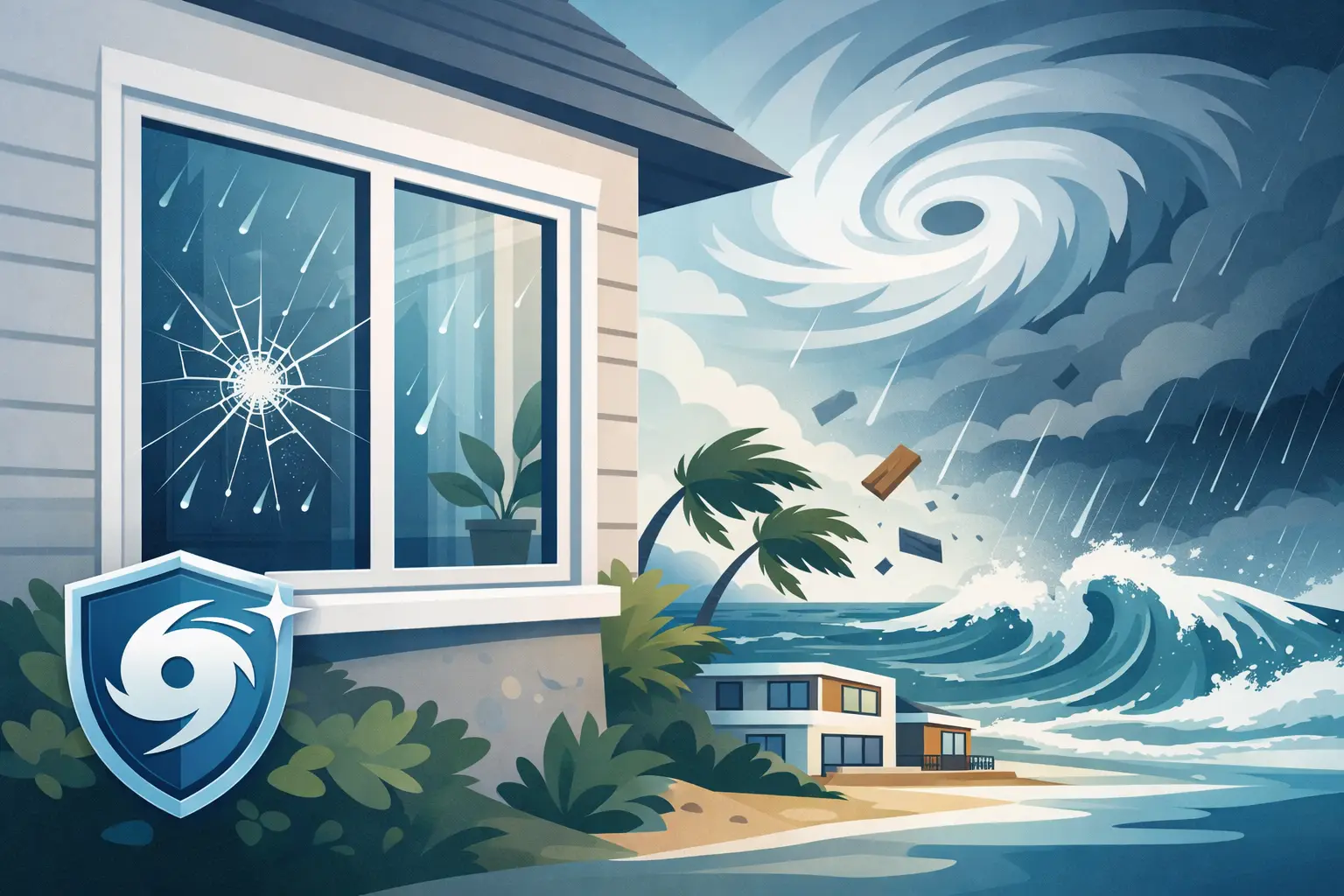
A window does not have to shatter to fail during a storm. In many Florida homes, the bigger risk starts when wind pressure changes inside the house after glass breaks or the frame gives way. That is why homeowners often ask, what are hurricane rated windows, and are they really different from standard replacement windows? The short answer is yes. They are specifically engineered and tested to stand up to hurricane conditions, including flying debris, high winds, and repeated pressure changes.
For coastal properties, that difference matters. A hurricane rated window is not just thicker glass or a stronger latch. It is a complete system designed to help protect the building envelope when weather turns severe.
What are hurricane rated windows designed to do?
Hurricane rated windows, often called impact windows, are built to resist both impact and wind pressure. In a major storm, windows face two separate threats. The first is debris – tree limbs, roof shingles, and loose outdoor materials can strike the glass at high speed. The second is structural pressure. As wind pushes and pulls against a home or commercial building, the window system has to stay intact in both positive and negative pressure cycles.
Unlike standard windows, hurricane rated units are manufactured and tested as an assembled product. That includes the glass, interlayer, frame, anchoring points, and overall performance under stress. If one part is weak, the system can fail.
Most impact-resistant glass uses laminated construction. That means two pieces of glass are bonded with a durable inner layer, usually a clear interlayer that helps hold the glass together even if it cracks. The goal is not to make the glass unbreakable. The goal is to prevent the opening from being breached.
How hurricane rated windows are tested
When people hear the term hurricane rated, they sometimes assume it is a marketing label. In reality, these products must meet strict testing standards before they can be approved for use in high-risk areas.
Impact testing
One of the best-known tests involves launching a large projectile at the window to simulate storm debris. After that, the unit is subjected to repeated pressure cycling to see whether it can still perform after impact. This matters because a window might survive the initial strike but fail once wind forces continue to build.
Pressure testing
Windows are also tested for design pressure, which measures how much wind load the product can handle. This rating helps determine whether a window is appropriate for a particular structure, opening size, and exposure level.
Water and air infiltration testing
In storm-prone regions, keeping wind-driven rain out is part of overall protection. Hurricane rated windows are also evaluated for how well they resist water penetration and limit unwanted air leakage.
In Florida, product approval and code compliance are especially important. Coastal homes and commercial properties often face stricter requirements based on wind zone, building height, and proximity to the water. That is one reason professional product selection and installation matter just as much as the window itself.
What makes them different from standard windows?
The biggest difference is performance under extreme conditions. Standard windows may work well for everyday weather, energy efficiency, and appearance, but they are not usually designed for impact resistance or hurricane-level pressure.
Hurricane rated windows typically include heavier-duty frames, reinforced hardware, laminated glass, and installation methods tailored to local code requirements. Many also provide everyday benefits outside of storm season. Homeowners often notice better noise reduction, improved UV protection, and stronger year-round security because laminated glass is harder to penetrate than standard glass.
That said, not every impact window is identical. Some products are better suited for large openings, coastal exposure, or higher design pressures. Others may meet minimum code but not offer the same level of long-term durability or finish quality. That is where product expertise becomes valuable.
Are hurricane rated windows the same as storm windows or shutters?
Not exactly. These products all relate to storm protection, but they serve different purposes.
A hurricane rated window is a primary installed window system designed to resist impact and wind loads on its own. Storm shutters are separate protective barriers that cover the window opening before a storm. Storm windows, in some contexts, refer to secondary windows added for insulation or weather protection, which is a different product category altogether.
For some property owners, shutters and impact windows can work together. For others, impact windows are the preferred solution because they provide constant protection without the need to install panels or close shutters every time a storm approaches. The right choice depends on the property, budget, and level of convenience you want.
Why Florida property owners invest in them
In coastal Florida, window performance is not a cosmetic detail. It can affect safety, insurance considerations, comfort, and long-term property value.
Hurricane rated windows help protect against storm damage, but they also reduce some of the everyday wear that comes with coastal living. Strong sun, humidity, salt air, and seasonal weather all put stress on exterior materials. Higher-quality impact window systems are built with durability in mind.
Many owners also appreciate the energy efficiency side of the investment. Laminated glass and better-sealed frames can help reduce heat transfer, which may support lower cooling demands in a hot climate. Some products also help block UV rays that can fade flooring, furniture, and interior finishes.
There is also the practical issue of readiness. When a storm watch is issued, impact windows are already in place. You do not need to move as quickly to install separate protective coverings. For full-time residents, seasonal homeowners, and commercial property managers, that peace of mind has real value.
What to look for when choosing hurricane rated windows
If you are comparing options, it is worth looking beyond appearance and upfront price. A good product should be matched to the specific demands of the building.
Code approval and product ratings
Start with verified approvals, design pressure ratings, and compliance with local and state requirements. In Florida, this is essential, not optional.
Frame and glass quality
The frame material, laminated glass construction, hardware, and finish all affect long-term performance. Coastal environments are tough on lower-grade components.
Installation quality
Even a premium window can underperform if it is installed incorrectly. Anchoring, sealing, flashing details, and substrate conditions all matter. Proper installation is what turns a rated product into a reliable protective system.
Style and function
Single hung, casement, picture, sliding, and custom configurations may all be available in hurricane rated models. The best fit depends on ventilation needs, opening size, and the look you want for the property.
Warranty and service support
A window purchase should come with confidence, not guesswork. Strong manufacturer backing and experienced local installation support can make a major difference over time.
Common misconceptions about hurricane rated windows
One common misunderstanding is that impact glass never cracks. It can crack under significant force. What matters is whether the glass remains bonded and the opening stays protected.
Another misconception is that all impact windows are equally strong. Ratings vary. The right product for a low-rise inland property may not be the right product for a waterfront home with larger openings and greater wind exposure.
Some owners also assume that replacing only the glass is enough. In many cases, the frame, hardware, and anchoring system are just as important as the glazing. Hurricane resistance is about the whole assembly.
Is it worth replacing older windows?
If your current windows are outdated, difficult to operate, drafty, or not built to current storm standards, replacement can be a smart long-term improvement. The benefits often go beyond hurricane protection. Better comfort, lower outside noise, stronger security, and improved curb appeal all add value.
For investors and commercial property managers, upgraded windows can also support property preservation and reduce maintenance concerns over time. For homeowners planning to stay in place, the decision often comes down to confidence – knowing the home is better prepared when storm season arrives.
An experienced local contractor can help evaluate existing conditions, explain code requirements, and recommend products that make sense for your property rather than pushing a one-size-fits-all option. For Florida owners, that local knowledge matters.
When people ask what are hurricane rated windows, they are usually asking something bigger: will these windows truly protect my property when the weather gets serious? The right answer comes from proven products, skilled installation, and guidance from professionals who understand coastal construction. If your windows are part of your storm protection plan, they should be built and installed like it.